
Stuttering in Children and Adults
Supporting fluent speech and confidence in communication.

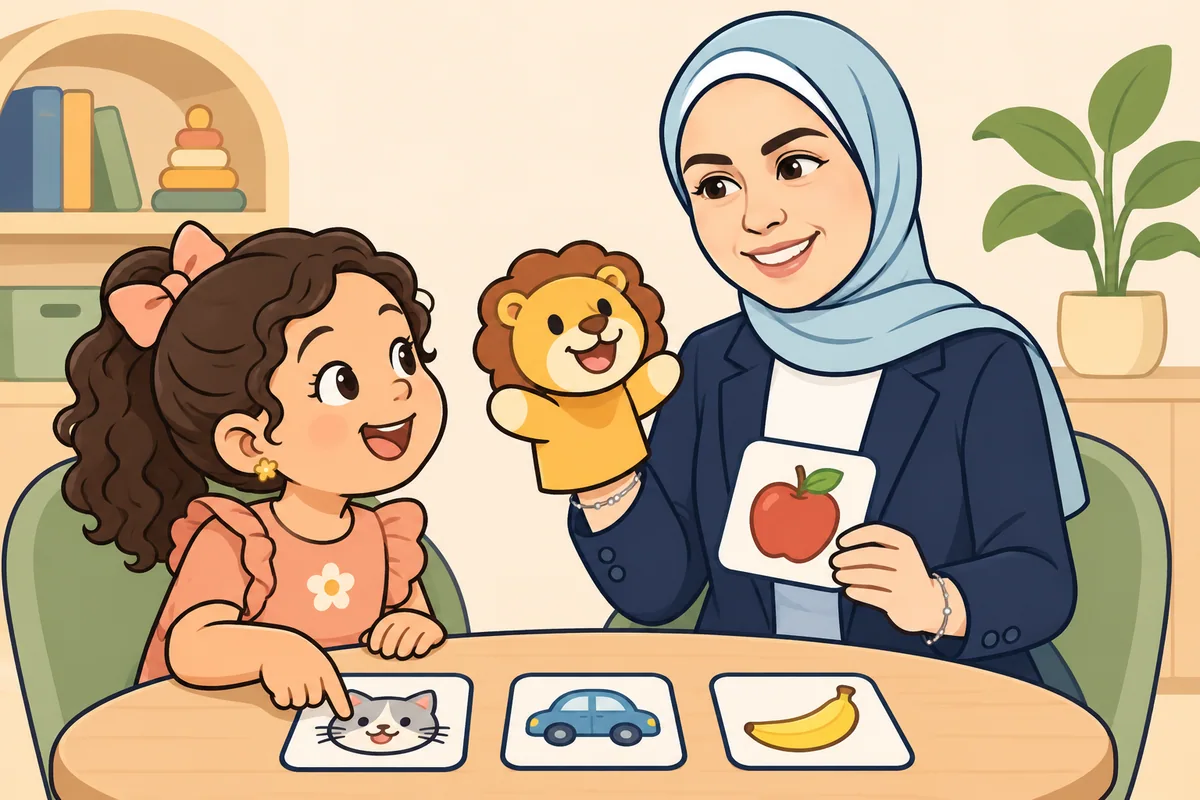
What is stuttering?
Stuttering, also called stammering, means speech is interrupted: the person repeats a sound or syllable (“b-b-ball”), stretches a sound (“sssssun”), or stops while the word will not come out. They know what they want to say; the difficulty is in getting the words out smoothly.
In children it usually appears between two and six years of age, while the child is still building language. At Dai we support children and adults in managing stuttering, with goals that fit the person's age and experience.
When should I ask for an assessment for my child?
The usual recommendation is to have the child assessed if any one of these is present:
- The stuttering has continued for 3 to 6 months.
- There is effort when speaking: tension in the face or neck, or movements made to get the word out.
- Someone in the family stutters or has a communication difficulty.
An assessment does not mean there is a big problem. It means you find out whether your child needs follow-up or reassurance. More in our article “My child stutters: will it pass, or should I see a specialist?” (in Arabic).
How should you respond when your child stutters?
- Listen to what they are saying, not how they say it. Respond to the meaning, and look at them while they talk.
- Speak a little more slowly yourself. Your calm speech calms theirs more than any advice.
- Do not finish their sentence. Wait until they finish it themselves, even if it takes time.
How do sessions at Dai work?
- A free first consultation You tell us what you are seeing, and the team helps you choose where to start.
- The assessment The specialist works out what the stuttering looks like: how long it has continued, whether anyone in the family stutters, and how the person is coping with it.
- The plan A plan for communication and fluency, with goals that fit the person's age and experience. The need and the number of sessions are decided after the assessment.
- Sessions and home With children, the work is with the child and the parents: ways to make speaking easier, and how the home can help. With adults, the support is for the speaker themselves.
For adults too
We support adults in managing stuttering, for the person themselves or a family member. More on the Speech Therapy Consultations for Adults page.
Session options
Online from anywhere, a home visit in Cairo, Giza, Alexandria, Fayoum and Gharbia, or at our partners' premises in Nasr City and Gesr El Suez. The team confirms which option suits the case and what is available.
Areas and partner premisesCommon questions
In most cases, yes: about 75% of children outgrow it. But there is no way to tell from home that your child is among that majority. The specialist is the one who judges that.
There is no approved medicine for treating stuttering. The work is with the child and the parents, and the earlier it starts, the easier it is.
The number varies from one case to another, and the specialist sets it after the assessment.
Online sessions suit many cases, especially consultations, follow-up and parent coaching. The team helps you choose what suits best; if online is not suitable, there are home visits and our partners' premises.
Who delivers the sessions?
Speech therapists and special educators. Their names and qualifications are on our team page.
Sources: NIDCD — Stuttering.
This page is for awareness and is not a substitute for an assessment by a specialist.