Articulation Disorders and Lisps
Clearer sounds and words.
What is a speech sound disorder?
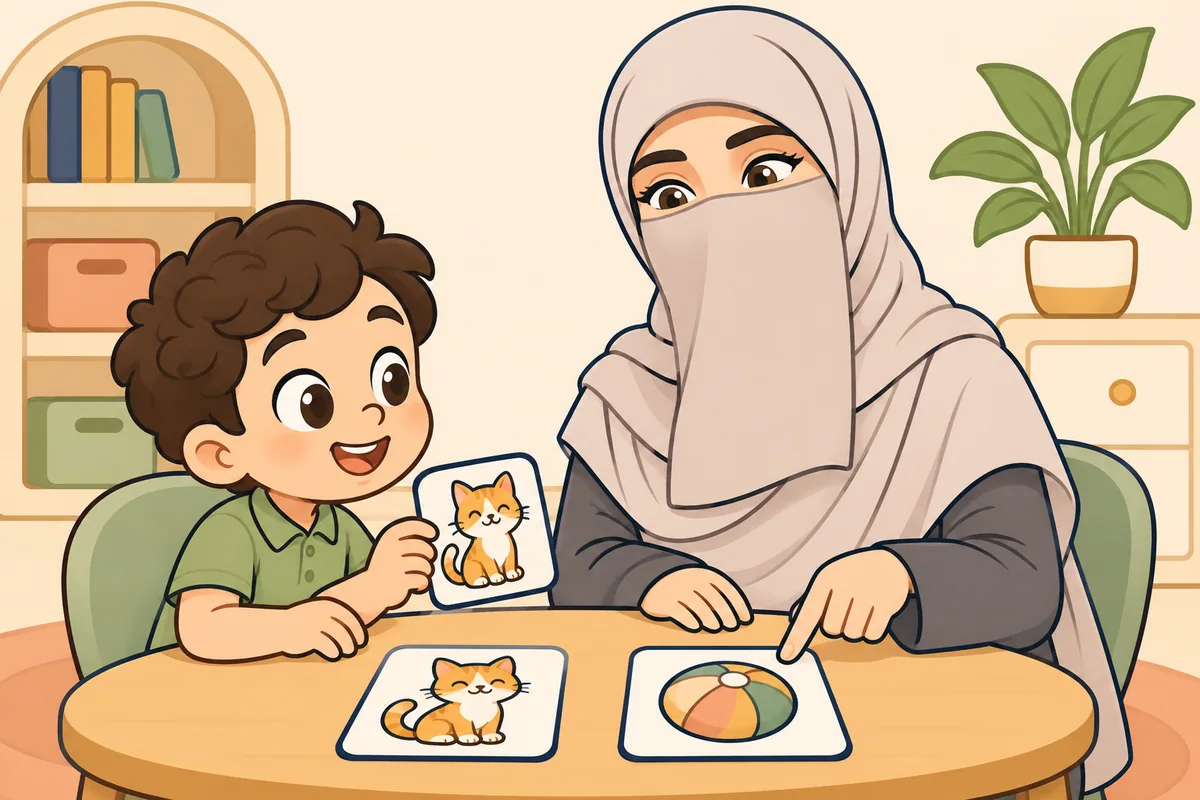
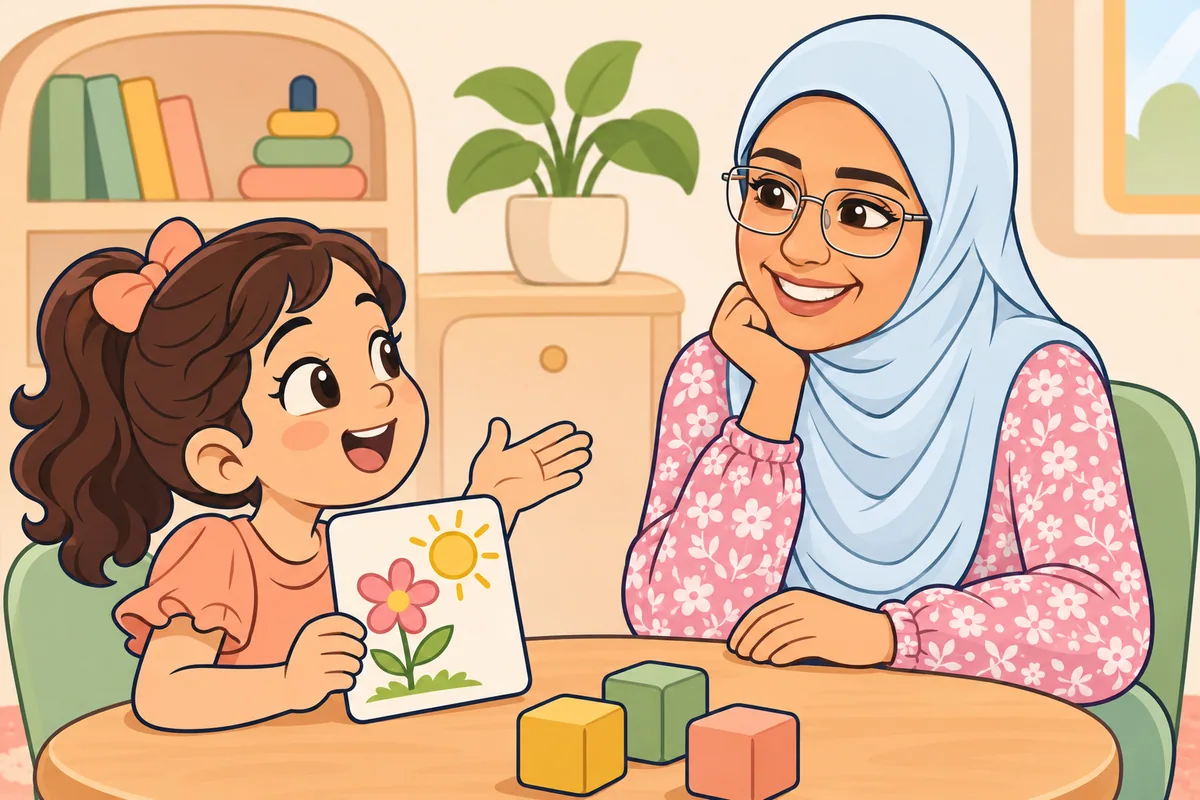
A speech sound disorder means a child has trouble saying certain sounds, or their speech is hard to understand. They may swap one sound for another (“wabbit” for “rabbit”), leave a sound out (“nana” for “banana”), or add a sound that is not there. What people commonly call a lisp is when a particular sound, such as s or r, comes out differently.
Mistakes in pronunciation are normal while a child is still learning to talk, and may become a problem if they continue as the child grows.
When should I ask for an assessment?
- Past three years and people do not understand their speech most of the time.
- Still swapping or leaving out sounds, and it continues as they grow.
- You suspect they are not hearing well.
Some sounds come early and others take longer, and their order in Arabic is close to English, with differences specific to Arabic. That is why the specialist compares the child's pronunciation with what is expected for their age.
A hearing check
Hearing should be checked, because hearing loss affects speech development. Other causes of a speech sound disorder include weak speech muscles and some developmental disorders; the assessment is what tells.
How do sessions at Dai work?
- A free first consultation You tell us what you have noticed, and the team helps you choose where to start.
- The assessment The specialist assesses speech sounds and how they are produced, and identifies the sounds that need work.
- Practice Sessions that target those sounds, with practice suited to the case. The need and the number of sessions are decided after the assessment.
- Practice at home The specialist gives you guidance for practising between sessions.
What does a child learn in speech sound sessions?
Speech sound sessions can include helping the child to:
- Learn the correct way to make the sound.
- Tell when a sound is right and when it is wrong.
- Practise the sound in words and sentences.
- Use it in everyday speech.
Session options
Online from anywhere, a home visit in Cairo, Giza, Alexandria, Fayoum and Gharbia, or at our partners' premises in Nasr City and Gesr El Suez. The team confirms which option suits the case and what is available.
Areas and partner premisesCommon questions
Many children learn to say sounds correctly over time, and some do not. If the mistakes continue as your child grows, the assessment is what tells whether practice is needed.
Children learning more than one language may pick up some sounds a little earlier or later. Differences in pronunciation that come from a dialect or a language are not a disorder.
The number varies from one case to another, and the specialist sets it after the assessment.
Online sessions suit many cases, especially consultations, follow-up and parent coaching. The team helps you choose what suits best; if online is not suitable, there are home visits and our partners' premises.
Who delivers the sessions?
Speech therapists and special educators. Their names and qualifications are on our team page.
Sources: ASHA — Speech Sound Disorders, CDC — Milestones by 3 Years, Amayreh and Dyson (1998) — The acquisition of Arabic consonants.
This page is for awareness and is not a substitute for an assessment by a specialist.