Speech and Language Delay in Children
Supporting children's understanding and use of language.
What is speech delay?
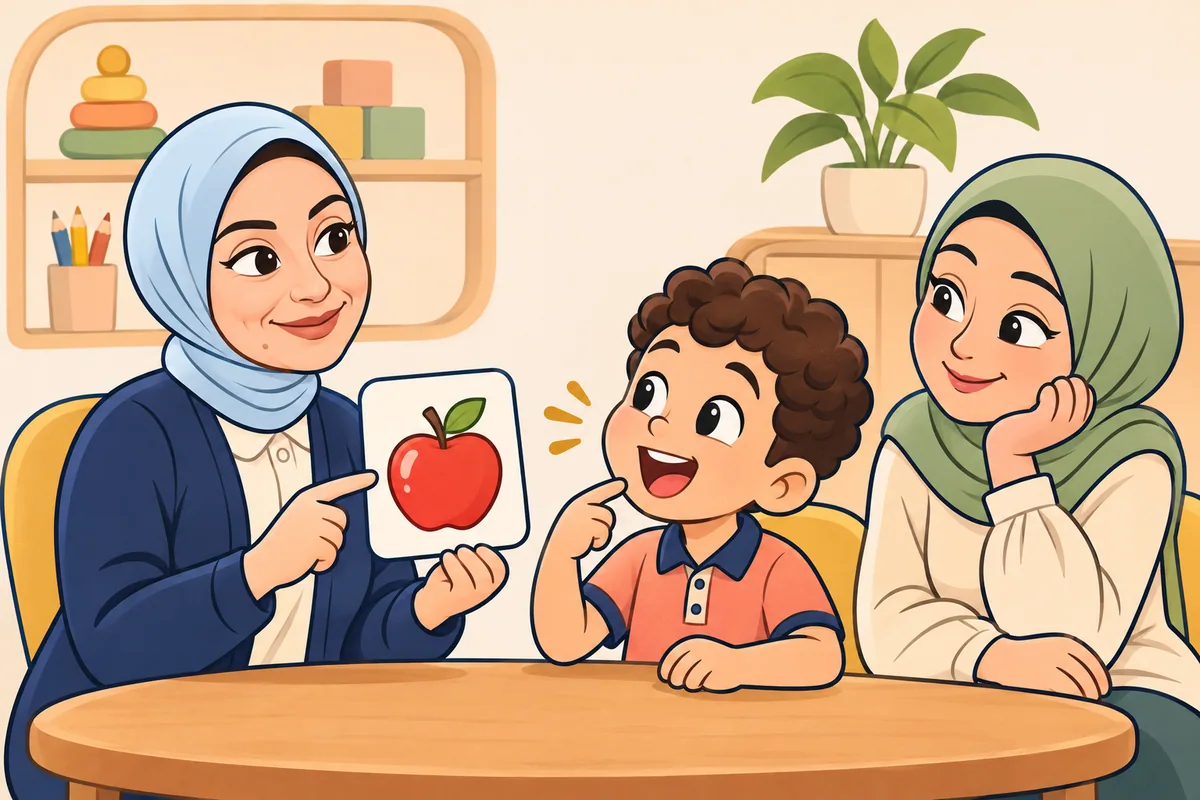
Speech delay, or language delay, means a child has not yet reached what is expected for their age in talking or in understanding language. Sometimes the delay is in expression: few words, or no sentences. Sometimes it is in understanding: the child does not follow simple requests. Sometimes it is both.
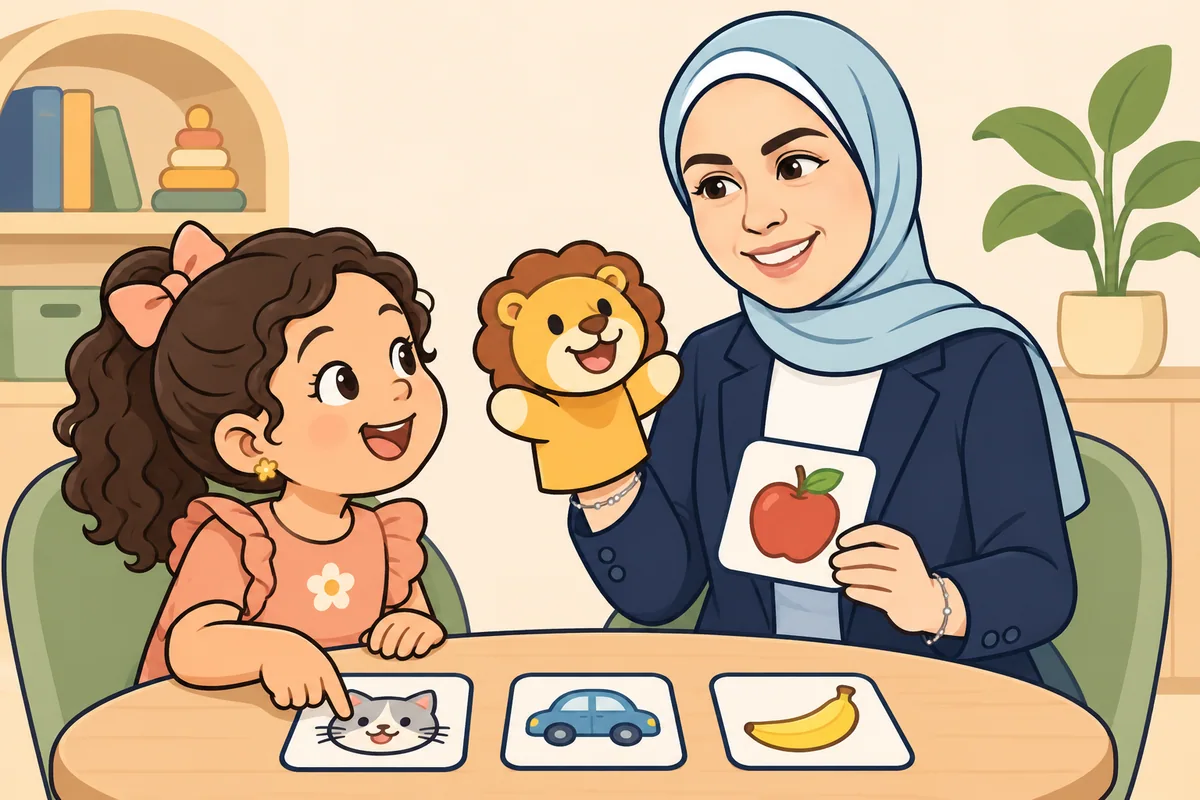
At Dai we help the child develop communication, understand words and use language, with a plan the specialist sets after the assessment.
When should I ask for an assessment?
Any one of these signs is reason enough to ask a specialist:
- Past 18 months and still not saying any words, or not pointing to what they want.
- Past two years and still not putting two words together, such as “more milk”.
- Does not understand simple requests such as “come here” or “give me”.
- Does not turn when you call their name, or you suspect they are not hearing well.
- Has stopped saying words they used to say. This is the most important sign, at any age.
What to expect at each age is set out in our article “My child is two and not talking” (in Arabic).
Before sessions: a hearing check
Hearing loss, even mild or temporary, affects speech. That is why a hearing check comes first: ask the paediatrician or an ear, nose and throat doctor for one, even if you feel your child hears.
How do sessions at Dai work?
- A free first consultation You tell us about your child, and the team helps you choose where to start.
- The assessment The specialist asks about the child's language history and daily communication, and looks at how they understand and express language.
- The plan The specialist sets practical goals for the family. The need and the number of sessions are decided after the assessment.
- Sessions and home We recommend that a parent joins part of every session, to follow progress and practise the exercises at home.
Your role at home
Speech is built in the ordinary day: while you feed, bathe and play with your child. We wrote simple ideas you can start with today in “7 ways to help your child talk at home” (in Arabic).
Session options
Online from anywhere, a home visit in Cairo, Giza, Alexandria, Fayoum and Gharbia, or at our partners' premises in Nasr City and Gesr El Suez. The team confirms which option suits the case and what is available.
Areas and partner premisesCommon questions
Early intervention can start from 18 months to two years of age in cases of language delay. The earlier we start, the better.
Some children are a little late and then catch up, but nobody can tell whether your child is one of them without an assessment. An assessment does no harm: if all is well you gain peace of mind, and if support is needed you gain months.
The number depends on each child's needs and abilities, and the specialist sets it after the assessment.
Online sessions suit many cases, especially consultations, follow-up and parent coaching. The team helps you choose what suits your child best; if online is not suitable, there are home visits and our partners' premises.
Who delivers the sessions?
Speech therapists and special educators. Their names and qualifications are on our team page.
Sources: CDC — Milestones by 18 Months, CDC — Milestones by 2 Years, NIDCD — Speech and Language Developmental Milestones.
This page is for awareness and is not a substitute for having your child assessed by a specialist.